Aluminum Billet Homogenizing Furnace
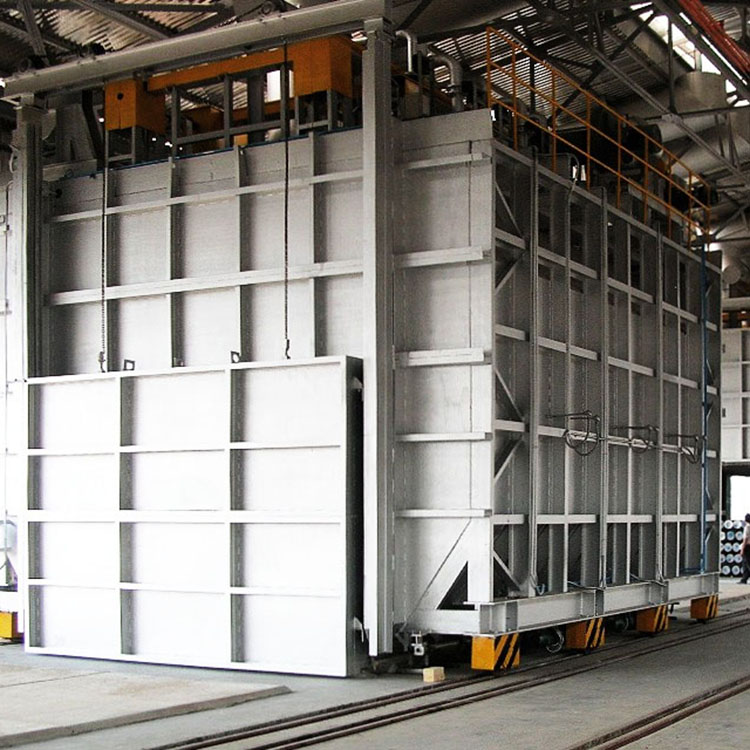
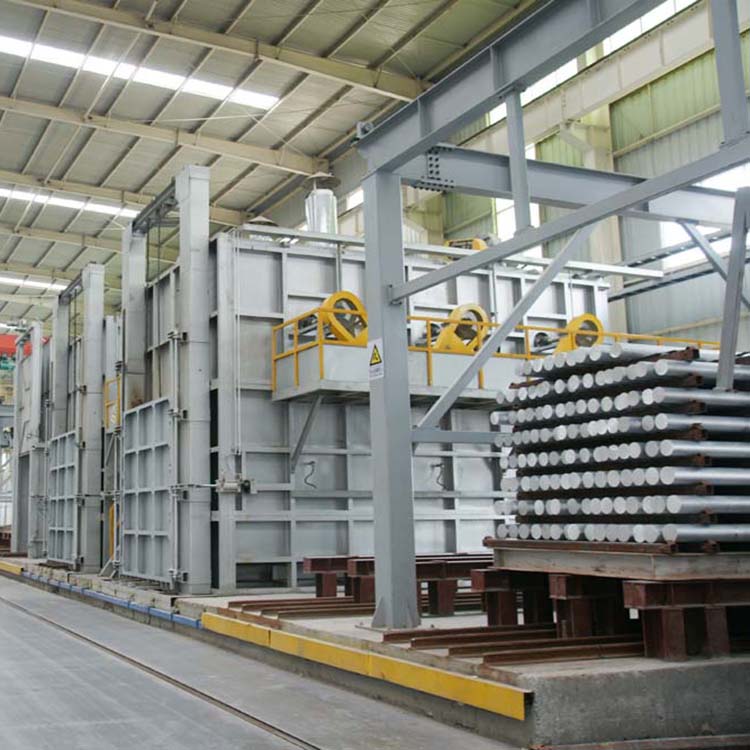
This equipment is a periodic heat treatment system with a hot-air circulation system; the maximum operating temperature is 600 ℃. The lining is full-fiber rather than brick, which is the main design choice and the reason for the energy figure below. The furnace is installed between the hot top billet casting machine or billet cutting machine and the extrusion press. Billets are homogenized after casting and cutting, before they reach the press.
1. Full-fiber lining saves about 40% energy compared with a brick-type furnace of the same capacity.
2. Low thermal conductivity and low heat capacity, so the furnace responds quickly and loses less heat when the door opens.
3. Hot air circulation system evens out temperature through the load — uniformity is the whole point of homogenizing.
4. Solid-state relays control heating, which gives finer temperature control than contactor switching and no moving parts to wear.
5. fiber is anchored directly to stainless steel round nails on the shell, so there is no brickwork to spall.
6. Furnace mouth and impact-prone areas are built in refractory brick, where fiber alone would be damaged.
7. Thermal shock resistance and good thermal insulation improve the high-temperature strength of the fiber.
The equipment is a trolley structure. The workpiece to be processed is placed on the trolley. After the workpiece is loaded, the trolley is driven into the furnace by the trolley's traction motor, and the furnace is closed. During the operation of the equipment, the circulating fan on the furnace top blows hot air over the workpiece, and the air returns through the fan suction port to form a circulation loop. This ensures temperature uniformity in the furnace. When the workpiece reaches the process temperature, the furnace door is opened, the trolley is driven out of the furnace, the processed workpiece is unloaded by the crane, and a new workpiece is installed for the next furnace production.
1. Merge the six steps into one UL block (or one table), keeping the numbering continuous.
2. Furnace Charging: The charging car transfers the tray into the homogenizing furnace and positions it on the internal supports. The furnace door is then closed and sealed.
3. Homogenizing Treatment: The furnace automatically heats and maintains the temperature according to the preset homogenizing curve. Circulation blowers and heating elements adjust automatically to ensure uniform temperature distribution, with a temperature difference of less than ±5°C during heating.
4. Material Transfer: After homogenizing, the charging car transfers the heated billets from the furnace to the cooling chamber.
5. Cooling: The billets undergo rapid cooling, followed by forced-air cooling until the required temperature is reached.
6. Material Unloading: The charging car transfers the cooled billets to the unloading area, where a crane removes them for the next production cycle.
| Feature | Specification |
|---|---|
| Lining type | Full-fiber energy-saving structure |
| fiber material | High-quality long-fiber needled blanket, specially processed |
| Fixing method | Directly fixed on stainless steel anchor round nails on the shell steel plate |
| Furnace mouth and impact areas | Refractory brick |
| Energy saving | Approx. 40% compared with brick-type furnace |
| Door | Same fiber construction |
1. Homogenizing extrusion billet before the press.
2. Billet plants supplying extrusion presses with tight quality requirements.
3. Plants replacing a brick-lined homogenizing furnace to cut energy use.
4. Receives billet from the aluminum billet cutting machine, downstream of the hot top billet casting machine.